
|
with Michelle Cameron Critique of Stories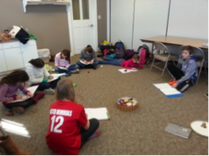 What a great batch of first-week stories! As usual, the early weeks of class mean that we discuss a wide variety of story techniques based on critique. Some of the things we discussed included:
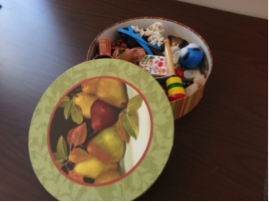
Today's PromptOur prompt for the day was my “treasure box.” Each student selected an item from it and used it to inspire their stories.
There were some great story starts (even one or two that were complete). I hope some of them will complete what they’ve begun. HomeworkThis week’s homework is either (pick one):
I can’t wait to see what they’ll write! with Ed Insel Conducting ResearchWe started class with a review of the students’ Google Search results. The main findings were:
I gave them a list of domains on the first five pages of the climate change search and highlighted the ones I’ve found to be reliable and would read first.
Connecting to Current Events For current events I shared the success that Lawrence Livermore National Laboratories recently reported. Newspapers reported it, but the best information comes from the LLNL site – why rely on someone else to interpret information you can read yourself? Using lasers, they’ve ignited a nuclear fusion reaction that gives off more energy than it consumes. We also discussed the broad media coverage of the drought in California but there has been very limited mention of the discovery of a vast amount of fresh water in aquifers under the ocean floor that are easily reachable drilling from onshore. For the last 30 minutes of class the students worked on a project to experimentally determine the numerical value of pi (π). They measured the diameter (d) and circumference (C) of seven objects and will use the equation C = πd to calculate pi. Homework for Next SessionAs soon as possible, one member of each team should email me their data (object, diameter, and circumference). Each student should calculate π for each object and then average them to come up with a single value for π. They are using their Engineering Journals to keep records of all their work. In next week’s warm-up we’ll compare the teams’ calculations and see whose value comes closest to the theoretical value. This will lead us into ways to quantify data variation and identify the sources of error.
with Kim Rodgers Getting Comfortable! What a joy this group is! We began by talking about what we are going to do in the class, learning more about ancient cultures through projects, maps, and stories, while using writing to play games. I emphasized that each child might feel comfortable writing one letter, while another child feels comfortable writing sentences, while another child might feel more comfortable drawing what they are trying to convey. All are encouraged, while worrying about spelling everything correctly is not something to get caught up on. It tends to stop the flow of thoughts. We talked about how they could ask me for help, but that they also have each other to learn from. Everyone needs help at some point, and those that rise to the occasion and help a classmate actually learn more in the end. 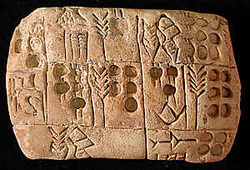 Mesopotamian Pictogram Mesopotamian Pictogram With that being said, we began a game called “Three Truths and a Lie.” I wrote down four things about myself on one paper and drew four pictures of the same things on another paper. After going over them I told the students to choose how they would like to convey their own four things, remembering that one of them is to be a lie. When the students finished, we came together and shared them, each student reading their lists or showing their pictures. It was great fun to guess which one was the lie! Ancient Mesopotamia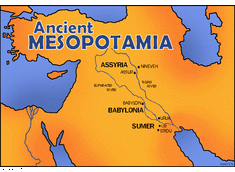 We moved into talking about Ancient Mesopotamia by finding where it was on the globe and talking about the climate. How would the climate affect how they lived their lives? The students began working on a map that we’ll slowly finish over our time studying this culture. Next week we’ll build a traditional home for the area as well as read “Gilgamesh,” one of the oldest fairy tales from that region.
See you next week! with Sally Zeiner Making ObservationsWhat is observation? What is a hypothesis? We began our first physics class by defining these two words. We practiced making observations of the world outside and then proposed some educated guesses about the things we observed. After making sure we understood those two very important parts of the scientific method we got to work! And it was fun!
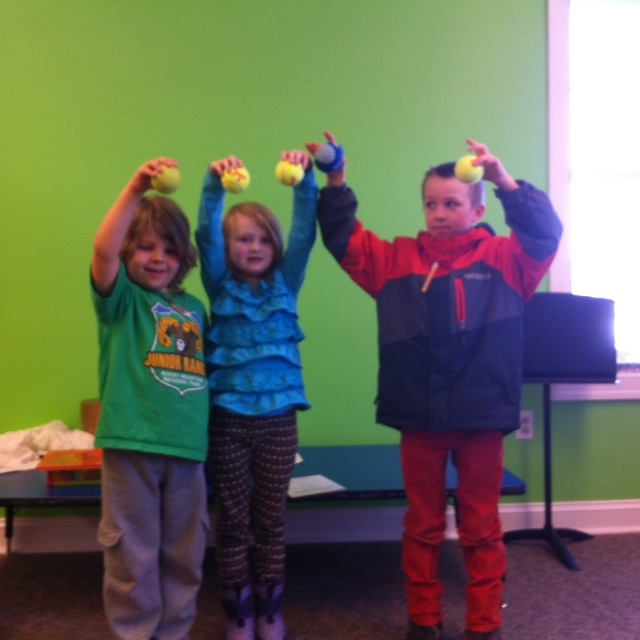
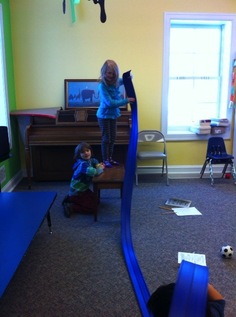
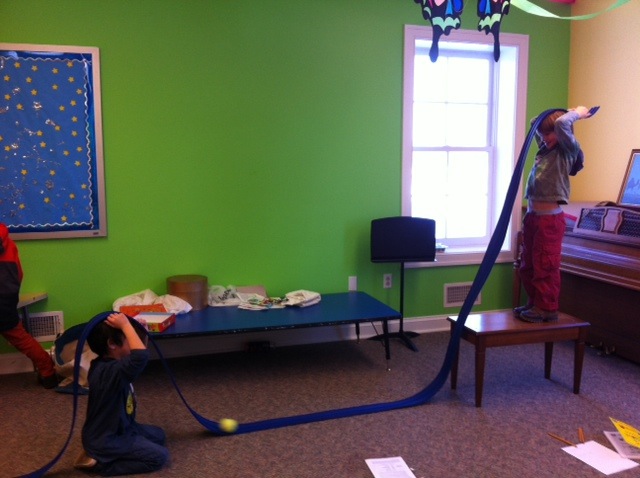
We began by dropping two tennis balls at the same time and observing them as they fell and hit the ground. Every student had a turn dropping the tennis balls. Then we recorded our observations in our lab books, and worked in groups to drop different combinations of balls. Again, we recorded our results. The students work as a wonderful learning community, helping one another with their experiments and record keeping. After an hour of work, dropping, observing, and recording, the students had a chance to explore gravity using some other materials, such as the BluTrac and Chicky Boom. They had a lot of fun.
For next week!Please work with your child this week to complete the orange/cotton ball drop, and answer the remaining questions in the lab book. We will discuss their results and answers next week.
Have a safe and warm week! with Jayne Besjak Argument-Building Toolkit It was great to see everyone in class today to kick off our spring semester! We jumped right into our persuasive writing material and began building some of the foundation for what will become the student “toolkit” for crafting sound, well-reasoned arguments. We covered a lot of ground in this first class, and I strongly advise that students review the handout I provided before they complete the homework assignment. We began by looking at a mock curfew scenario where a teen with a newly minted drivers license has just been dealt the blow that their parents have set an earlier than expected weekend curfew. How can the teen construct a convincing argument for a later curfew that their parents would actually listen to? We will continue to refer back to this hypothetical scenario in the coming weeks as we step through the process of building sound, well-reasoned arguments. Defining Our Terms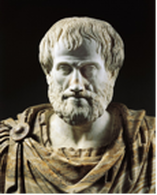 Aristotle (384-322 BC) Aristotle (384-322 BC) We spent a large portion of the class defining key terminology, including: argument, rhetoric, logic, and deductive vs. inductive reasoning. Students should understand that an argument, in the context of this class, is defined as a means of providing evidence or proof to support what you believe. And, that the main objective is not necessarily to “win” but rather to determine what is right and true. This is best done by approaching all topics (and debates) with humility and openness. We will be using Aristotle’s Common Topics as the foundation for understanding and building our arguments. The Common Topics are a set of argument categories or techniques that allow the writer/speaker to uncover all the possible valid arguments for a topic. Each week we will look at examples of these techniques in a variety of persuasive forms – speeches, editorials, advertising, etc. In the coming weeks, students will develop their own persuasive writing pieces based on topics of their choice. The first Common Topic is known simply as Definition. This is the important first step of preparing for your argument and involves:
I provided students with a list of techniques for defining the terms of their argument. We did not have time in class to go over these in any depth, but students did read an excerpt from Harold Ickes’ speech “What is an American?” and looked at Ickes’ use of several of these definition devices. If students are interested in reading the entire speech to better understand its context, you may find it HERE. HomeworkFor homework this week students should read the definition essay I provided and then choose one of the list words on the homework handout to construct their own definition paragraph. Remember - I am asking you to use several definition techniques to provide a clear definition of the word as you understand it. Do not write a thesis statement or argue a point – this is strictly a definition exercise.
Good luck and see you in class next Monday! with Michelle Cameron Seven QuestionsThis was a great first class and I’m really delighted to be working with your young writers. As a warm-up, and to get to know the kids a little better, I asked them all a series of questions. Answers ranged from practical to highly imaginative, goofy to thoughtful:
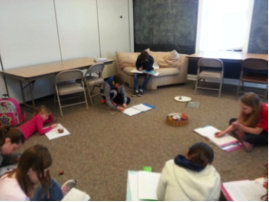
Add-a-Line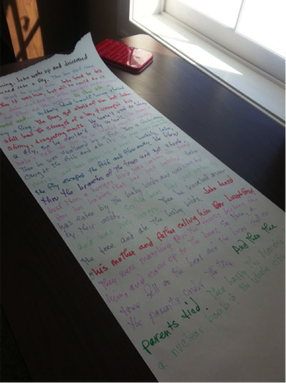 Then we wrote a collaborative Add-a-Line story. I started them off with this line: “One morning, Jack woke up and discovered he’d turned into a fly.” Here’s what they ended up with: One morning, Jack woke up and discovered he’d turned into a fly. Then his dad came in and tried to swat him. Jack tried to tell his father it was him, but all he could do was buzz. John decided his father couldn’t understand him and flew out the window. He flew into a forest and…suddenly found himself being chased by a frog. The frog got a hold of him but John still had the strength of a boy and escaped his slimy, disgusting mouth. He wasn’t used to being a fly so he couldn’t fly so well. He knew it wasn’t safe for him so he headed over the water. He was swallowed by a fish. Then a fisherman caught the fish and ate it. The man was strutting nearby and was eaten by a bear. Luckily, John the fly escaped the fish and flew away. He flew through the branches of the trees and got stuck. Just then, a hungry bird was looking for food for her babies that had just hatched. John was eaten by the baby birds and was crushed by their stomach acid. The bear had just woken up and was very hungry. He knocked over the tree and ate the baby birds. John heard his mother and father calling him for breakfast. They were marching through the forest looking for him and came up to the bear. A tree fell on the bear and the bear fell on the parents under the tree. The parents died. Then Larry the Monster set off a nuclear bomb and the whole city blew up. THE END Once we finished our collaborative story, each kid took a line from the story as the starting point for a new one. Many of them didn’t finish their stories in class, but we heard what they all wrote. I also explained my rules for reading their work, listening to others, and offering supportive, constructive critique that starts off with a positive first statement, then can offer suggestions. I discourage the writer from speaking up during critique – you’re not listening if you’re defending the work – but also let them know that , as the writer, they make the final decisions whether to make the suggested changes or not. For Homework... For homework this week, students should do ONE of the following:
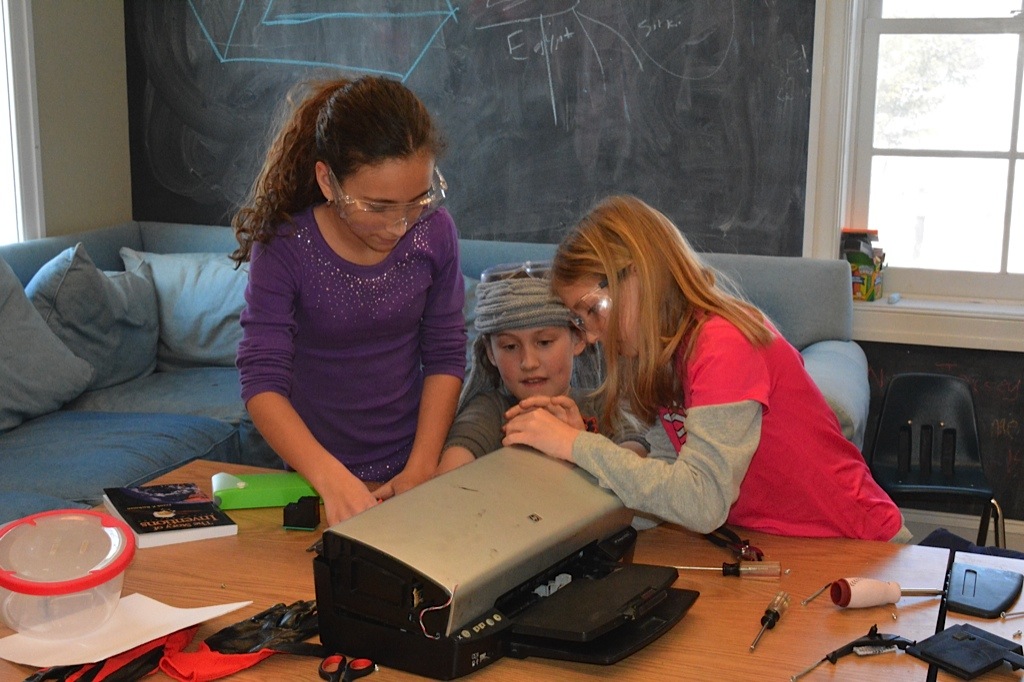
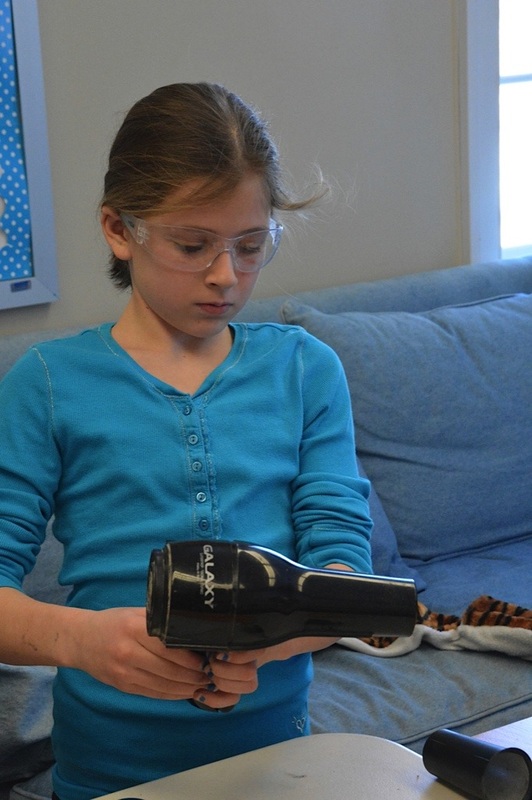
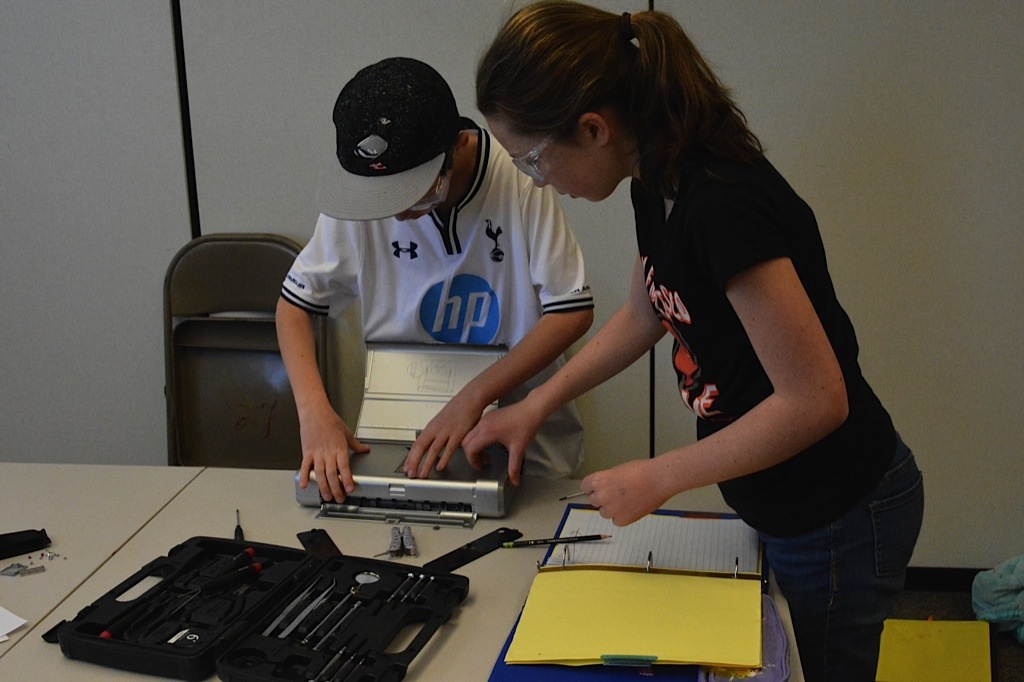
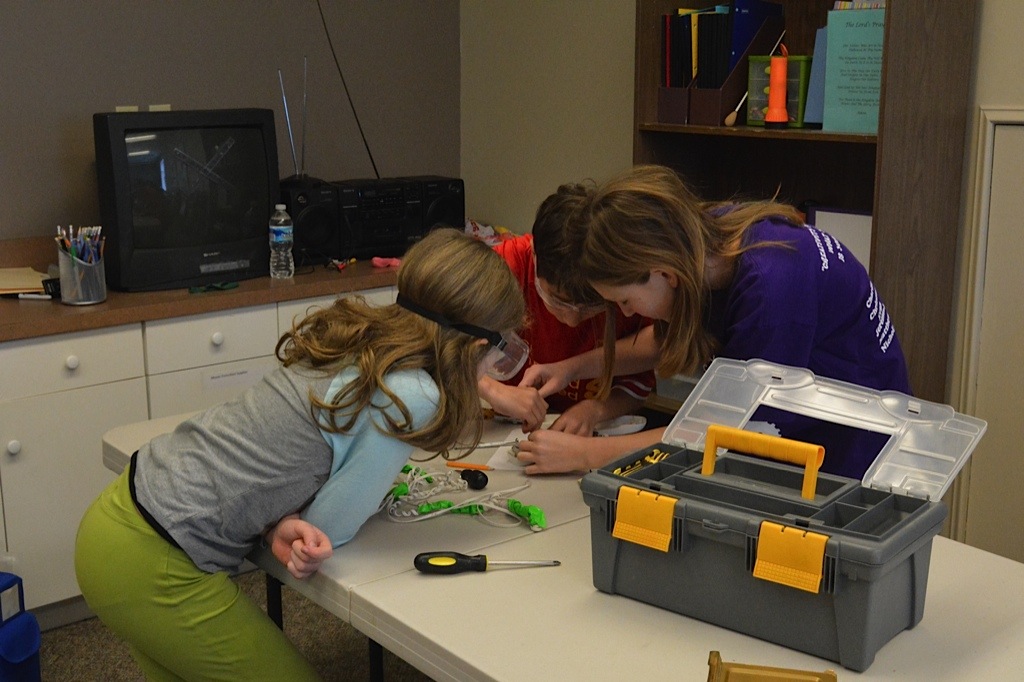
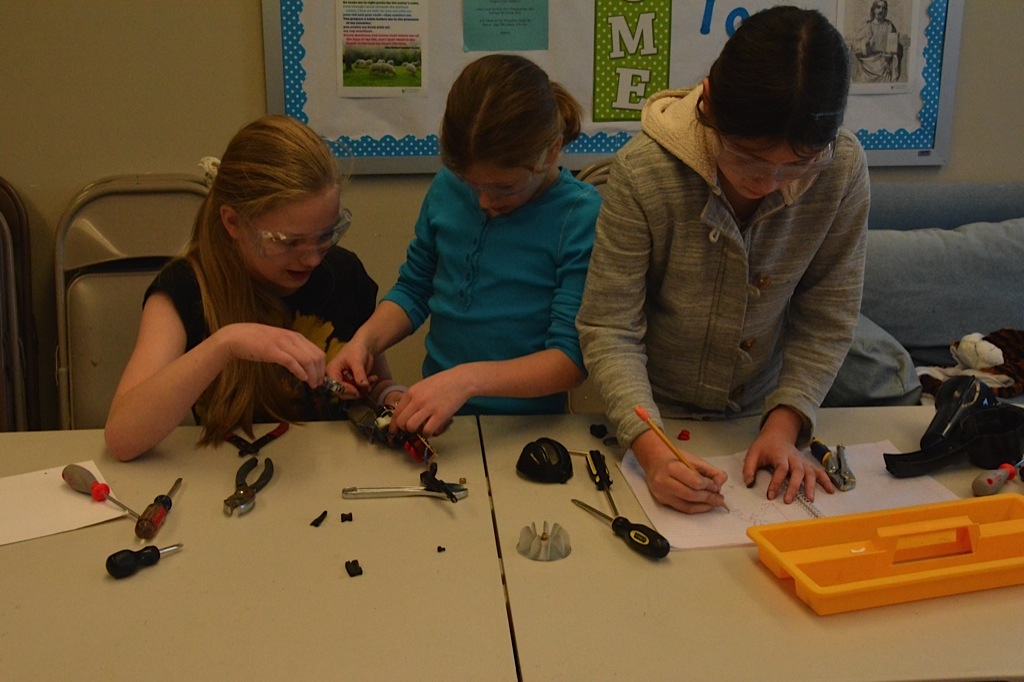
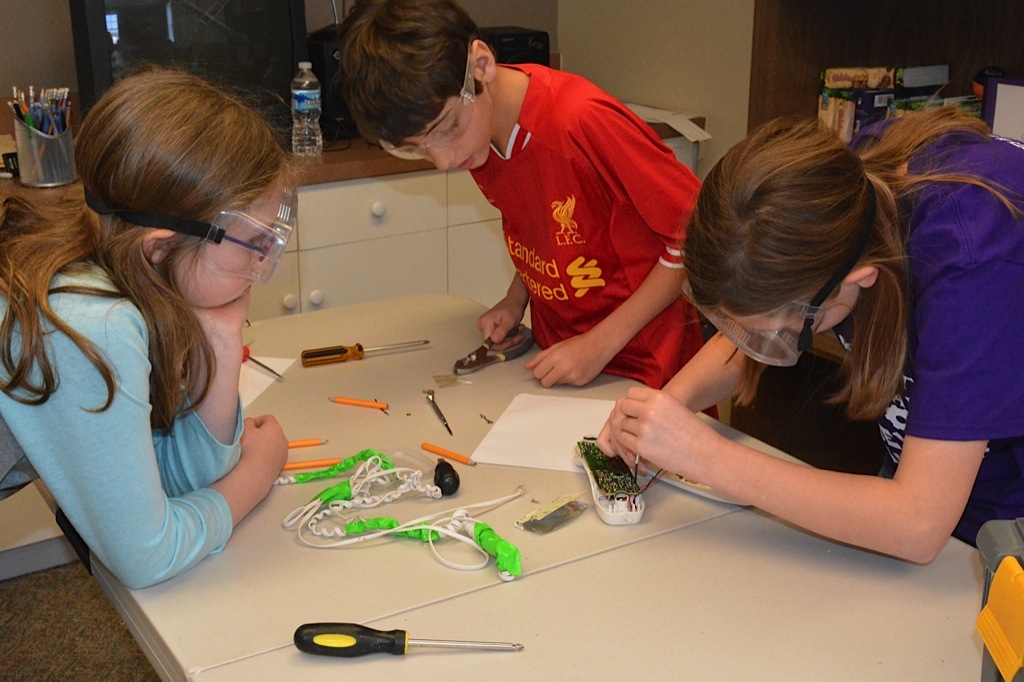
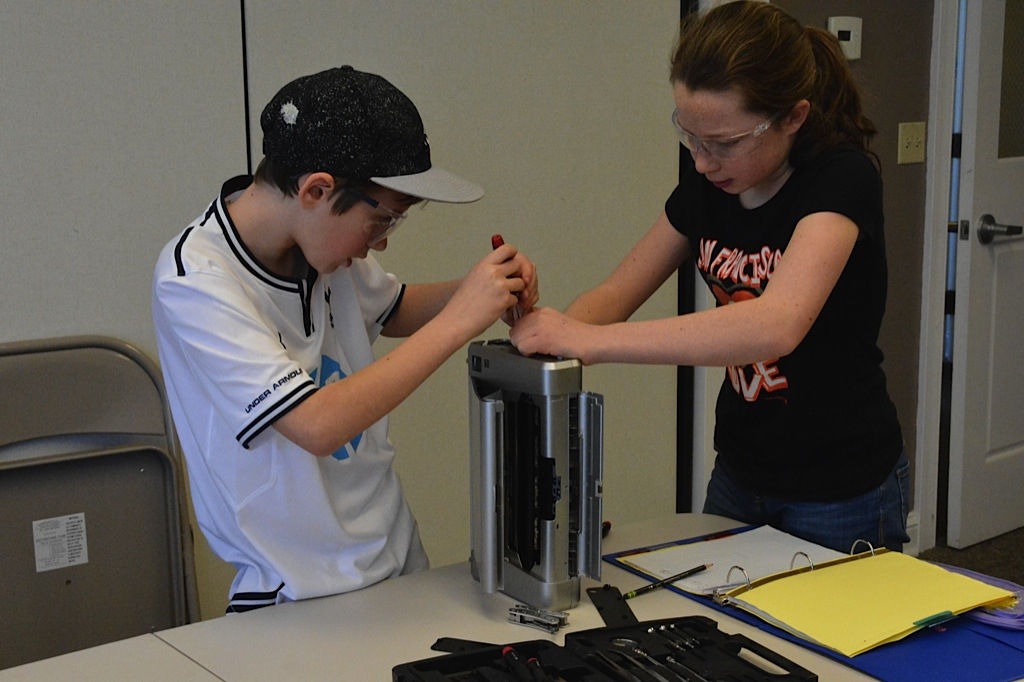
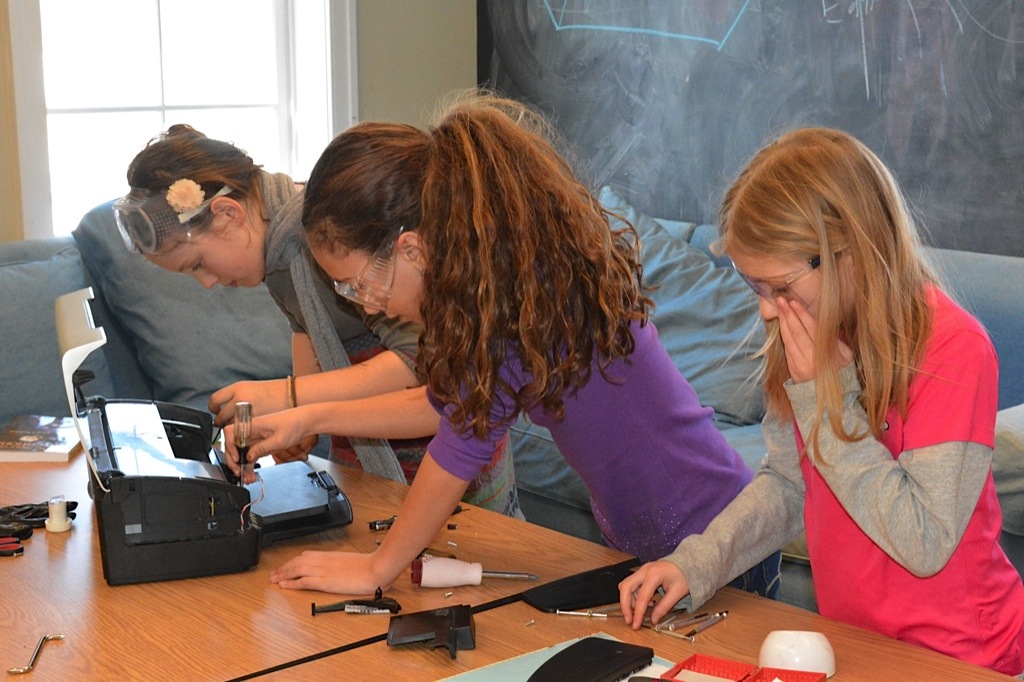
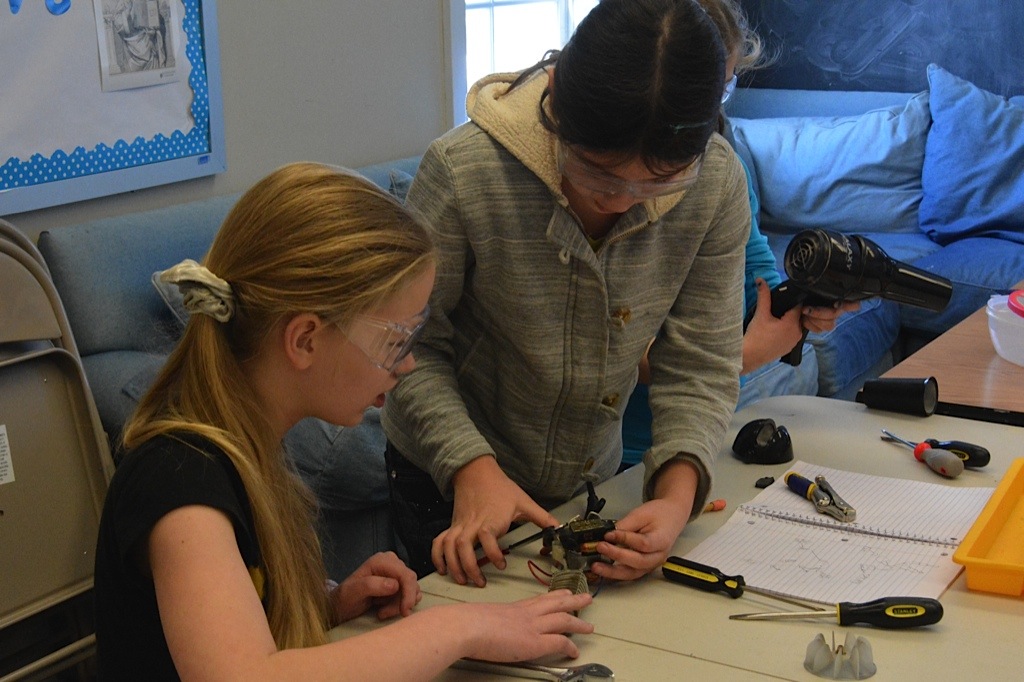
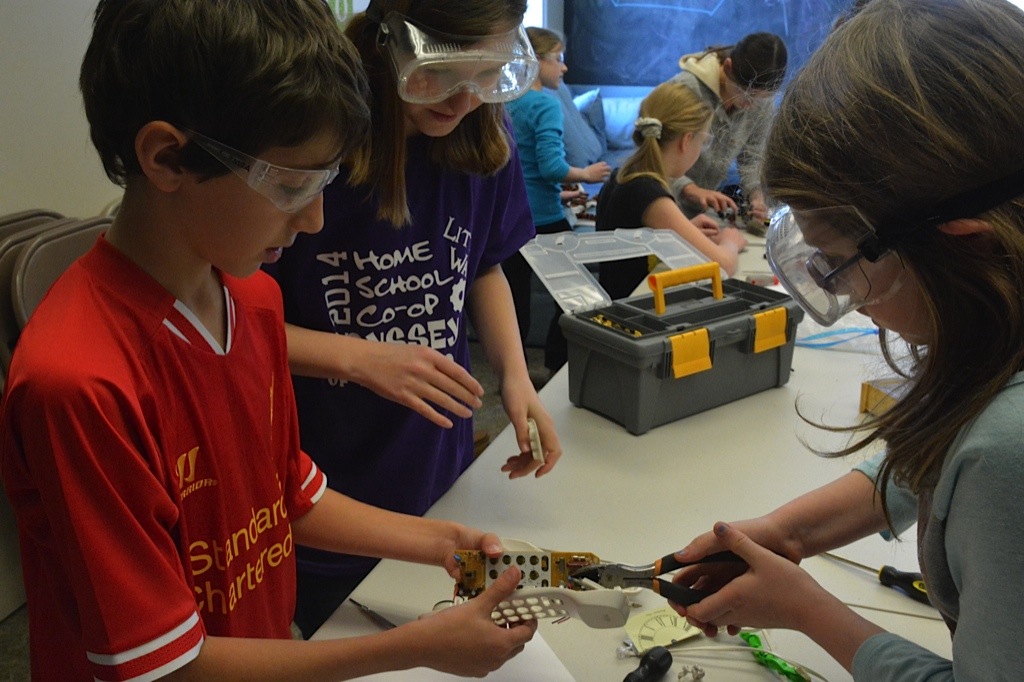
I’m very much looking forward to what they’ll bring in. They can bring copies for the rest of the class if they wish, but it’s not a requirement yet. Have a great week! with Leigh Ann Yoder Take it Apart!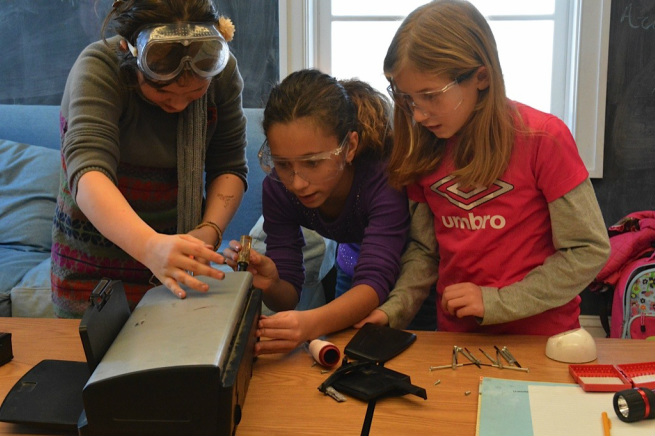 We had a great start to class today! All of the students were engaged and contributed to our discussions and activities. The students are terrific and I am positive we are going to have a wonderful semester together. We began class with some rules and an overview of the class format. The students were anxious, so we went right into our opening activity. They had five minutes to figure out what was inside three separate boxes. The boxes were completely sealed, so they could only use their senses. We discussed their educated guesses and then tested them (by opening the boxes). Most of the guesses were incorrect, which was wonderful, because it led us to our class motto: "If you're not prepared to be wrong, you'll never come up with anything original." For the students reading The Story of Inventions, they were able to relate this to James Watt and his steam engine invention. Next, I asked the students to read their homework assignments. Not all of the students completed this assignment. I did discuss the importance of homework and that they should take responsibility for completing it. Most of the assignments are designed to create engaging class discussions. I then read a short biography of the Take-apart King, Charles Kettering. Ask your student what he is famous for and why we refer to him as the Take-apart King. By this point the students were bursting with excitement, so we broke into teams and started taking our own items apart. We will continue with our take apart activity next week, so please bring back your tools! If you did not have safety glasses today, make certain you bring them next week.
Homework AssignmentsHere are the assignments for this week. Parents: you may need to create a PBS Learning Media account for your student to follow the links.
1. Watch - Ask an Engineer 2. Read - Ten Fun Facts 3. Watch - What if Engineering Disappeared for a Day 4. Research Alfred Hitchcock - a famous engineer! You can start here, but try to find a bit more information as well. No need to write anything, just be prepared to discuss. 5. Optional: Read Chapter 2 from The Story of Inventions Have a wonderful week! with Ed Insel Engineering Journals On Monday we started class with some brief introductions. I shared a general description of engineering jobs I’ve held and the types of assignments and career progression engineers enjoy. Our first topic is the most fundamental core engineering skill: maintaining good records. Two-student teams were shown samples of lab notes from Alexander Graham Bell, Albert Einstein, Linus Pauling, Charles Darwin, and the Manhattan Project. Each team came up with observations about legibility, analysis, and writing style. I gave each student their own Engineering Journal, the kind most often found in engineering (as opposed to the style used by basic research groups). As a whole group we took what they had learned and came up with a list of “rules” we are going to follow. They’re not rigorous, and they couldn’t withstand a patent challenge, but they address basic journal-writing discipline and are a good place to start. Homework for Next SessionTheir first homework assignment deals with conducting a literature review. Research is not synonymous with “Google” or “Wikipedia”! For my generation the big challenge was finding published information, but what we did get was peer-reviewed and reliable. This generation can access vast amounts of information but must decide which data is reliable. Their assignment is:
Email me their results by midnight Friday so I can compile them. In next week’s warm-up we’ll compare our findings to see if search results really are biased by our online profiles.  There are NO CLASSES today due to the winter weather.
Stay safe and warm and enjoy the snow! |
Categories
All
Archives
May 2016
|

 RSS Feed