
|
with Michelle Cameron Setting Sail, Farewell!Today was our last day spending time on our voyages. The kids still have some work to do at home – please do have them finish up whatever stage they’re currently in. More below. We started off today by sharing our transportation words – everything from submarines to time travel! Next week we’ll be using all the words we’ve been collecting, creating stories from them. 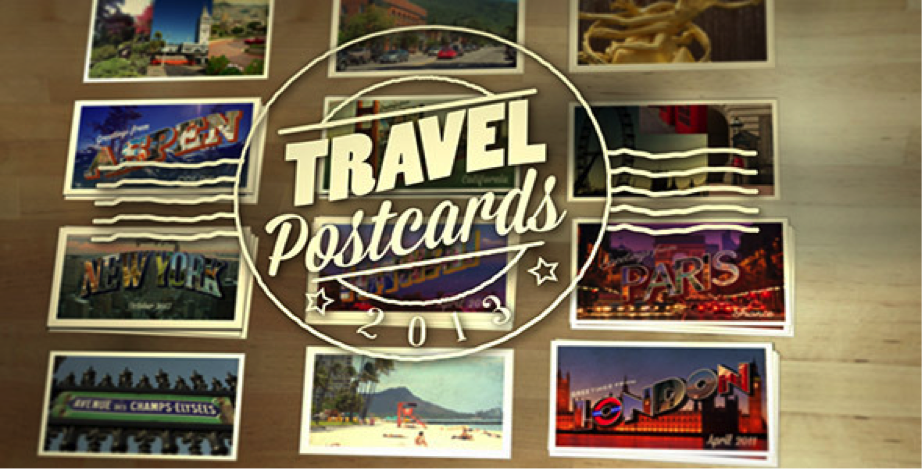 We caught up with additions to our voyage stories, including all the great postcards they created. Then it was time to re-embark on our stories. Those students who had already completed their stories were given comic blanks. There’s more than one way to tell a story – and the idea was to illustrate, in comic book form, what had occurred from packing their bags through the three days until arrival, and then what happened while they were at their destination. Comics are a great way to tell a story with fewer words, while still encouraging sequential thinking. Any time your writer balks at a long story, asking them to write a comic is a great way to get the creative juices flowing. And besides – they light up at the idea! Homework Again, for homework this week, please have them finish whatever stage they’re in. Not everyone is going to get to the end of this voyage, but that’s perfectly fine. In fact, in several cases I’ve been encouraging students to slow down and take the time it requires to write well – not just be done. That’s a hard concept for them, but an important one!
We’re thinking BIG with this week’s words – anything to do with the solar system! Next week we’re going to use our words to make some new stories. with Angela Harris First, let me say how delighted I am to be back as "facilitator" (albeit on-line) for Mosaic Freeschool. While I've continued to manage Mosaic Minutes and the website over the past year and a half, the last time I posted my own class summary was March of 2013! It's been wonderful re-connecting with our high school students, and I look forward to continuing our journey into quality modern literature this school year. Intro to The Chosen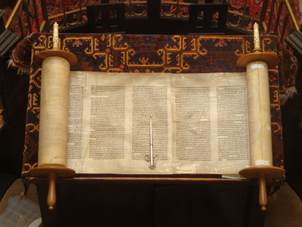 The Torah The Torah We kicked off Session I of Interpreting Literature by introducing a variety of new terms and concepts. We looked at maps of New York and Brooklyn, defined yeshiva, Talmud, Torah, Tanakh, and Hasidic (all should be added to your vocabulary glossaries for The Chosen) and discussed an overview of Book One. Please be sure to follow the reading and essay assignments from the syllabus, and not the Glencoe Study Guide. We are taking four weeks to read the book, instead of three, and answering different questions for our five-hundred word essays. Any questions, please be sure to ask! Journal Questions Every week we will be responding to a question that I ask that will relate topics in the reading to our personal experiences. This is an important component in preparing for exploratory essay writing as this type of essay writing encompasses aspects of journaling and relating experiences, or research, about a particular topic. These journals should be kept private so the students can feel free to express themselves in as much detail as possible. We will be doing a timed five-minute write each week in our "journals." The Torah and Folk Tales 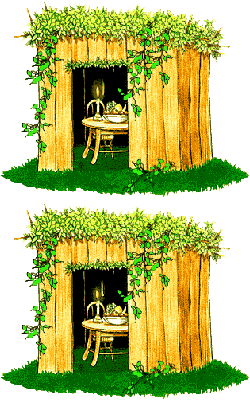 A Sukkah hut where meals are taken during the festivals of Sukkot A Sukkah hut where meals are taken during the festivals of Sukkot I posted a handout related to the Torah to the Gathering Ink Community Page (a private Google+ forum for registered students and their families) and we read through some interesting facts together, for instance, did you know that if the Torah is dropped in the synagogue, the entire congregation may be required to fast for 40 days? The Judaic faith features heavily in our book, The Chosen, and I want to take this opportunity to explore different aspects of Judaism within our class. So far, I think it's been very interesting (for me, too!). We then talked about the Jewish autumn festival of Sukkot (October 8-15) and I read aloud a folk tale normally told during this time. If you would like to read it, it is here: The Reward. Exploratory Essay Writing We will only be writing exploratory (open) essays during this session (four essays plus one final project which can be creative or informative). We will not be sharing our opinions in our essays or proving or defending, only exploring all sides of an issue. The purpose is to get you to research a topic with an open mind, approaching the topic with curiosity to discover new information and solutions. Exploratory essay writing is an introduction to the argumentative essay. You will undoubtedly need to conduct research over and above just reading the book, although you certainly may relate events in the book to your essay as well as to your own personal experiences or those of a friend or family member (although my guess is you will have limited personal experiences to draw upon when answering these questions). Regardless, please reference your sources within the essay (we are not worrying about citing our sources as footnotes at this point in our class). You should be able to write 500-words easily, that is the required word count for now. Here is a structure you can follow:
Important Note: I have posted a sample essay on the Community Page written by one of my students in our class here in Texas. You will do yourselves a big favor by reading it in advance of writing your own! If you're stumped about how to turn our question this week into an essay which does not express an opinion, this essay will give you an idea of how to do it, although I expect you may find completely different research on the topic (in fact, you should). You may also want to review our handout on Open and Closed Essay Writing. We are only writing open essays for this session. The handout is also on the Community Page. HomeworkHomework is detailed on the syllabus, please read it carefully. One note about the questions on GSG pgs. 14-15: Because we are reading the book more slowly than the Glencoe Guide suggests, you might not be able to answer questions 2-3 yet on pg. 14--you may skip them and only answer question 1, however you should be able to answer questions 4 or 5 on pg. 15. Any confusion/problems...let me know! See you all on-line next week. Session II Starts Jan 7, 2015 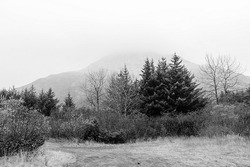 Brrr! Great winter read! Brrr! Great winter read! If all this sounds intriguing, our second on-line six-week session will begin Jan. 7, 2015. We'll be taking on the Jack London classic, Call of the Wild, and reading a short story by Rudyard Kipling. We'll also be taking side-trips to Alaska and the Yukon (history, geography) and writing a combination of personal response and exploratory essays. We have one or two spots available and you may register on-line.
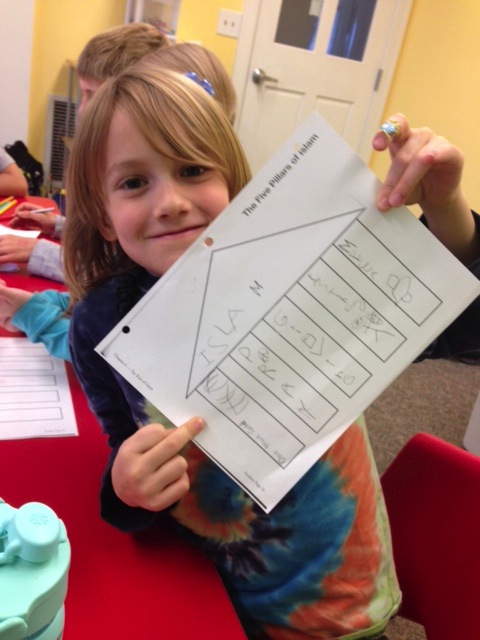
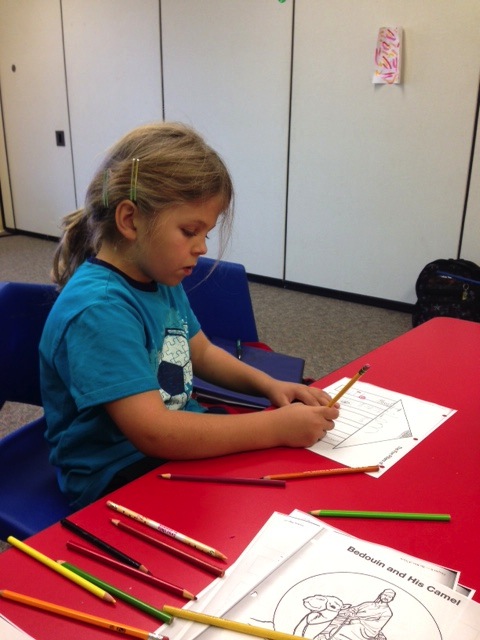
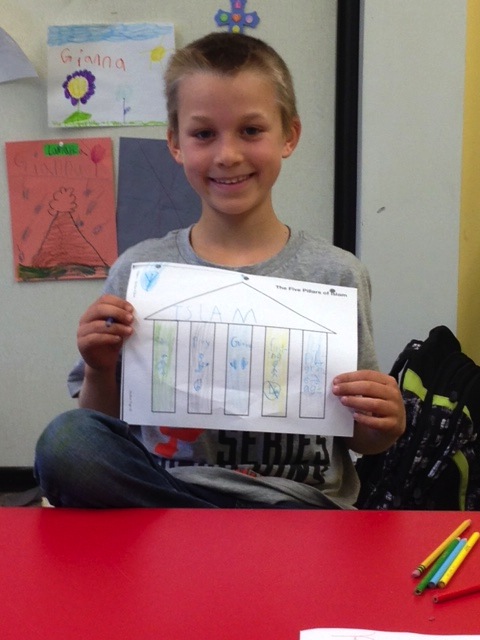
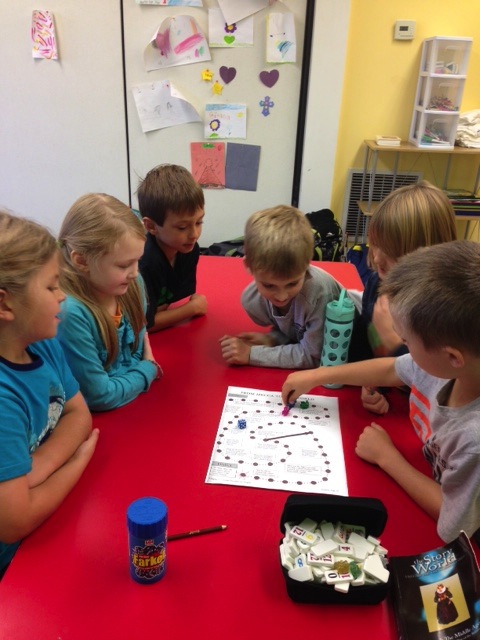
with Kim Rodgers The Rise of IslamOur focus in class on Monday was the rise of Islam and how it became an empire. We read about Muhammad’s life and what led him to begin leading people towards Allah, “the one true God”. We discussed the five pillars of the Islamic faith; faith, prayer, giving, fasting, and pilgrimage and why these things were important for following the Islamic faith. We went on to read about how Islam spread even after the death of Muhammad, with Muhammad’s friend Abu Bakr as their leader. As they conquered surrounding lands they took with them the Islamic faith and won many followers. During class we came up with symbols to remind us of the five pillars and included them in our notebooks. We also played a game where the students needed to remember details from our readings in pairs as they progressed through the board. We didn’t get a chance to finish, so we’ll take some time during class next week to conclude our game.
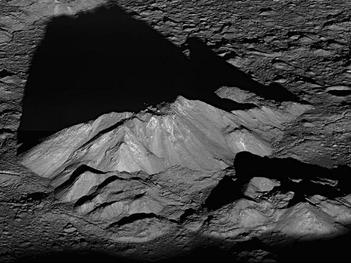
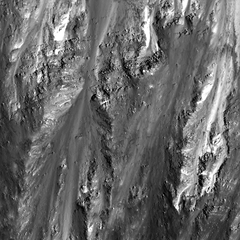
Coming Up: China!Next week our focus is on The Great Dynasties of China. For homework the students have their notebooking page and two maps. There is a sub-heading on the notebooking page about Sinbad. We didn’t get to that story, so please feel free to put a line through that and use the page to summarize what we talked about. There are two maps because we covered two chapters this week. If you have any questions please let me know. See you next week! 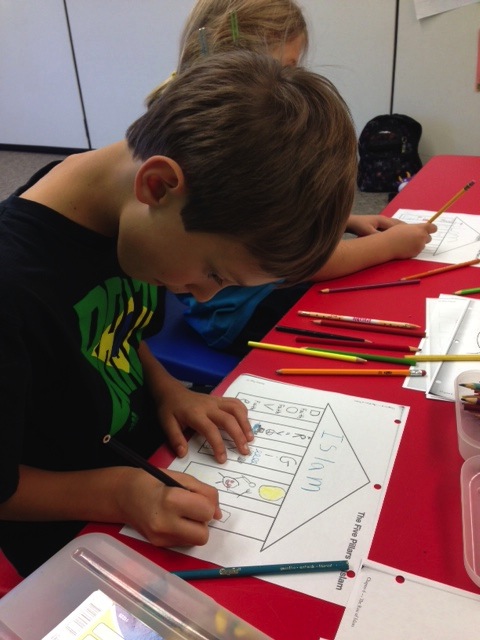 with Leigh Ann Yoder Virtual Tour of the Moon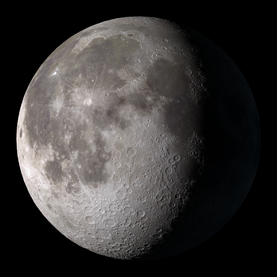 Bella Luna! Bella Luna! Ranger Bob took the class on a stunning "virtual tour of the Moon" this week, sharing with us a version of his presentation from the International Observe the Moon Night, 2012. He began by discussing some important scientific Moon facts. Many scientists now believe that the Moon was formed some 4.6 billion years ago when an object several times the mass of Mars collided with young Earth. The massive impact ejected a huge amount of debris into space, which was pulled into orbit by the Earth's gravity, forming the Moon - our own natural satellite.  Relative size of Earth-Moon Relative size of Earth-Moon We learned that we've been mistakenly led to believe that the Moon is far larger than it actually is (relative to the size of the Earth). Additionally, the Moon is farther away than we would assume from standard textbook diagrams. If we use a basketball to represent a scale model of the Earth, the Moon would be approximately the size of a tennis ball, and the distance between the two balls would need to be a full 23 feet to accurately represent the distance between the Earth and the Moon. We took a mini "field trip" to the basement of the church building where Ranger Bob used a single light source to illustrate the different concepts of Earth-Sun system and Earth-Moon system relationships. 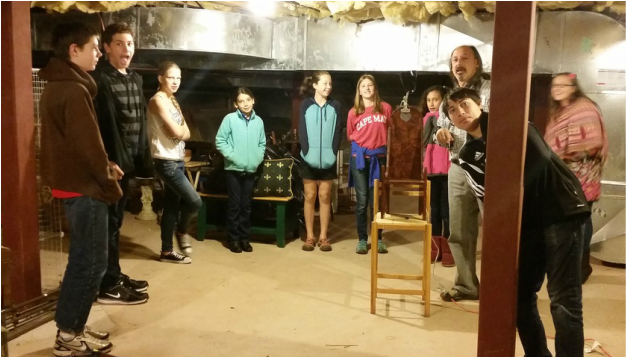 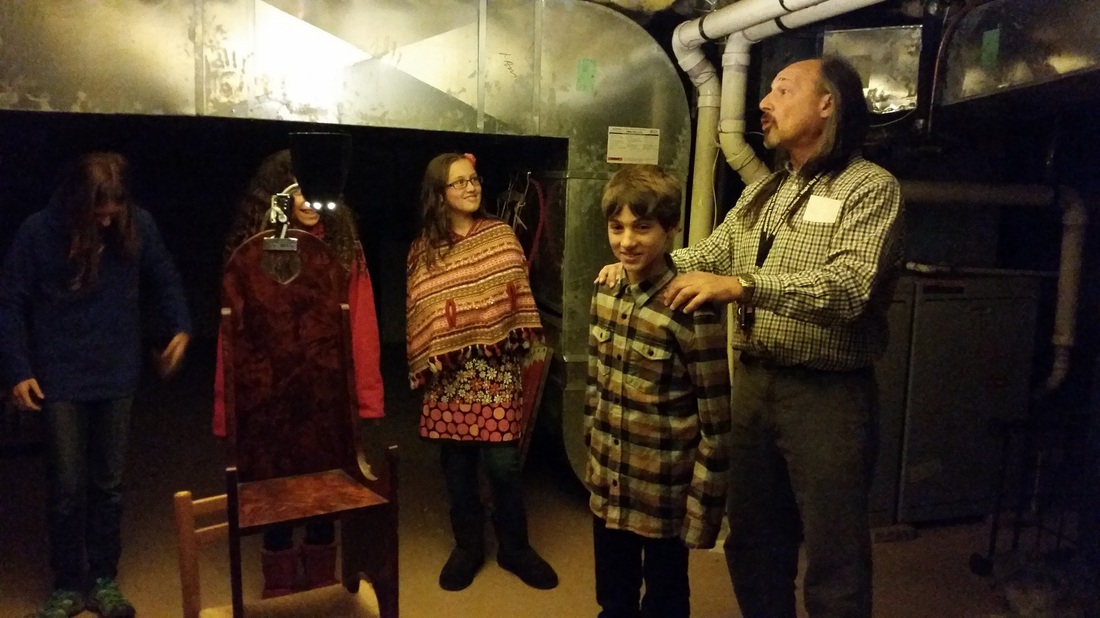 He also provided a demonstration of the phases of the moon, illustrating that the phases we see are a function of our location on the earth in relation to the moon-sun orientation. 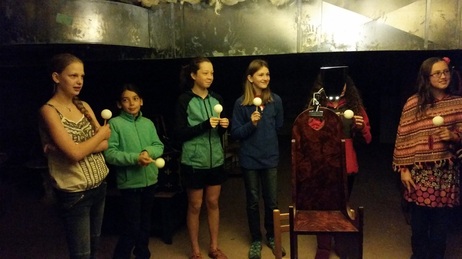 The new moon occurs when the moon is positioned between the earth and sun, and the three objects are in approximate alignment. The entire illuminated portion of the moon is on the back side of the moon; the half that we cannot see. At a full moon, the earth, moon, and sun are in approximate alignment, just as the new moon, but the moon is on the opposite side of the earth, so the entire sunlit part of the moon is facing us. The shadowed portion is entirely hidden from view. One important concept to remember is that exactly one half of the moon is always illuminated by the sun. Back in the classroom, Ranger Bob shared some of the cultural connections we have with the moon and how these both sustain and inspire us - tides/fishing, industry, art, literature, and Native American culture to name just a few. He concluded our virtual tour of the moon by showing some incredible imagery taken from NASA's Lunar Reconnaissance Orbiter (LRO), which photographs from just 30 miles above the moon's surface. We observed impact craters, rilles and graben, volcanoes and domes, mare (sea), mountains, and lava flows. Spectacular!
HomeworkMandatory:
ECA Chapter 7 Moon Log **Prepare for Game Show Day/mid-term*** Study pages 173-174 of ECA (Chapters 1-7) Study all highlighted vocabulary words in Chapters 1-7 of ECA Optional: JK Chapter 2 NB - pg. 76, 77, 78, 82, 84 with Michelle Cameron Setting Sail, Day 3 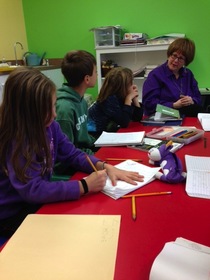 We started off today by sharing our holiday words. Looks like everyone’s ready for the holiday season! Then we listened to two stories students brought in – both of which were finished. It’s a delight to see them so excited about having a beginning, middle, and end to their stories! 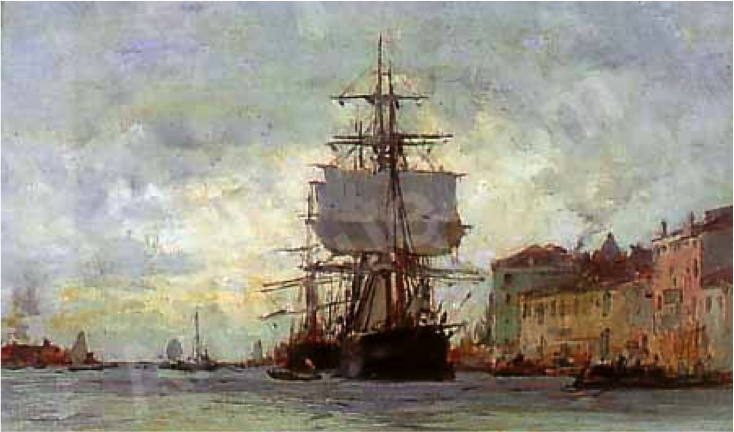 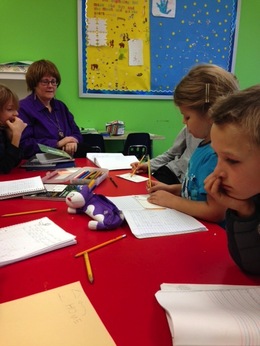 This is going to be a pretty short recap, as the kids are immersed in their voyages and are making progress at different rates. Many of them have already arrived at their destination and spent some time “seeing” what was there and writing about it. Each one has a “postcard” that they are supposed to illustrate – they took those home with them. For homework this week, please ask them to finish wherever they are – whether that be still in their Captain’s Logs or in the report of what they find at their destination. Have they achieved what they set out on this journey to achieve? Why or why not?
They voted and agreed – unanimously and with much arm waving! – to continue their journeys next week. We’ll definitely be bringing them to a close then. And since we are on a journey, this week’s words are travel or transportation words. |
Categories
All
Archives
May 2016
|
 RSS Feed